
Workflow Agents
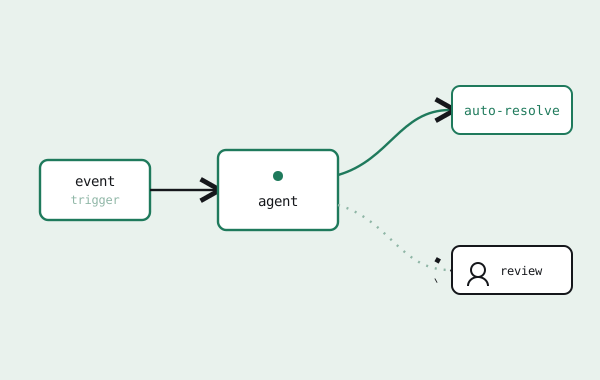
Most workflow problems hide in the gaps between teams: a form is incomplete, a client has not replied, a document needs checking, a CRM field is missing. Everyone is busy doing the work, so nobody has time to step back and fix how the work moves. Workflow agents sit in those gaps: checking, chasing, updating, routing, and escalating the exceptions that need a person.
The repetitive 80%
We identify the parts of the workflow that are frequent, rule-bound, and slowing your team down: CRM updates, policy checks, onboarding forms, KYC reviews, document extraction, schema mapping, ad operations, and routine email follow-up.
Built on the new rails for agentic work
SaaS platforms are increasingly exposing new ways for agents to act directly inside workflows, rather than forcing people through endless screens, tabs, and clicks. We map your processes to these new rails, integrate with the tools you already use, and design agents that can move work forward across CRM, email, document stores, onboarding tools, ad platforms, and internal knowledge bases.
Humans stay in the loop
Agents do not replace the people who understand the business. They remove the drag around them. We design workflows where agents handle routine volume and escalate when context is missing, confidence is low, or the stakes are high.
More judgement over time
As the agent proves itself on real work, we tune prompts, tools and escalation rules. Over time, it can take on more of the workflow: identifying incomplete information, applying policy logic, preparing decisions, and recommending next steps.
- 01
Less manual admin.
- 02
Faster internal workflows.
- 03
Cleaner data across your systems.
- 04
More time for your team to focus on growth, relationships, and higher-value judgement.
>_ Other services
>_ 01
Agent Performance Engineering
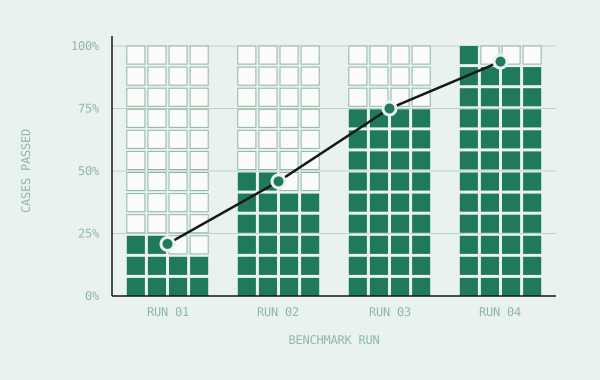
Take the agent you have already built and make it production-ready, including the data and workflows underneath it.
>_ 02
Data Agents
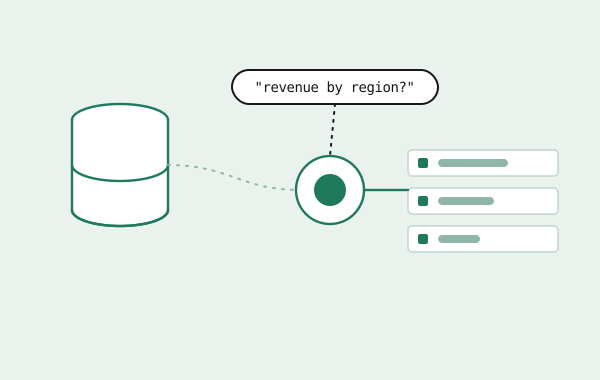
Ask your business questions in plain language, grounded in the data your team already trusts.
>_ 04
Consulting
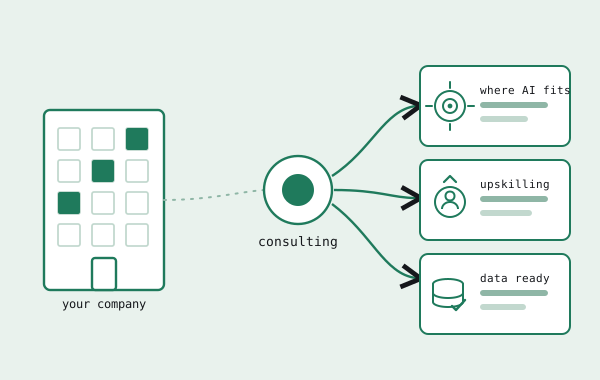
Find the right AI starting point before you commit to building the wrong thing.
>_ Let's Talk
Keen to
connect?
Got a workflow to automate, data your team can't easily query, or an agent that isn't ready yet? We'd like to hear about it.